

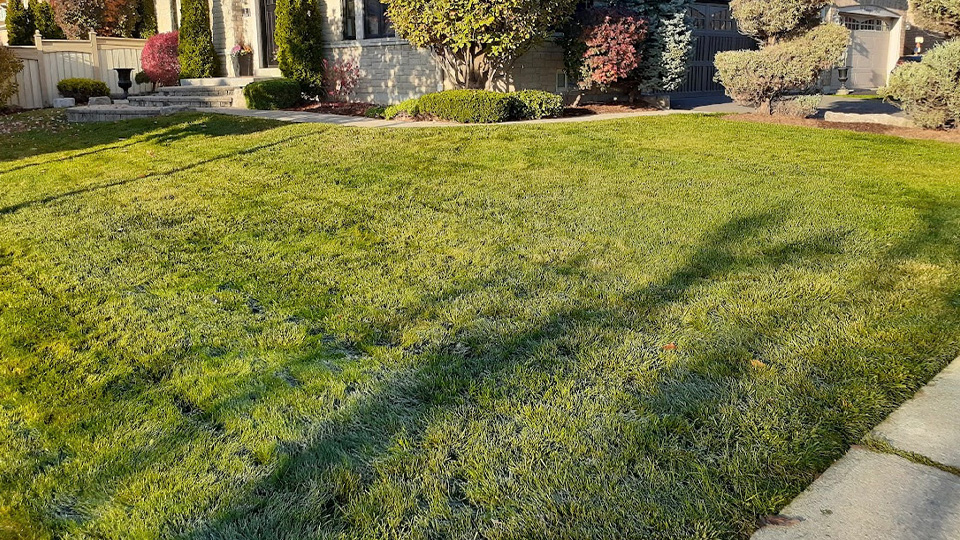
After a heavy rain, you might notice your lawn looking uneven or feeling soft underfoot. What was once smooth, and level suddenly turns into a patchy, bumpy surface. It’s a common issue for many homeowners — especially during spring and fall when rainfall is frequent. However, don’t worry – those bumps are fixable with proper care and attention.
Let’s look at why your lawn becomes bumpy after rain and what you can do to keep it healthy and even.
Soil Compaction and Poor Drainage
One of the most common causes of a bumpy lawn is soil compaction. When soil becomes tightly packed, rainwater can’t soak properly. Instead, it pools on the surface, making the ground soft and uneven. Over time, the wet spots settle at different rates, causing the lawn to feel lumpy. Compacted soil also prevents roots from getting the air and nutrients they need, which can weaken the grass and worsen the uneven surface.
Lawn Aerating can help loosen compacted soil, allowing water, air, and nutrients to reach deep into the roots. It’s one of the most effective ways to restore smoothness and promote stronger, healthier grass.
Natural Soil Movement
Rain doesn’t just add moisture — it can also move soil. When heavy rain falls on sloped or uneven areas, it slowly erodes the topsoil and carries it downhill. This shifting soil leaves dips and bumps across your yard. If your lawn tends to flood or develop puddles, it’s a good sign that water isn’t draining evenly. You can prevent this by filling low spots with a mix of soil and compost in early spring or late summer, before the next rainy season.
Thatch Buildup
Thatch is a layer of old roots, stems, and grass that collects between your soil and the green blades. When it becomes too thick, it can trap moisture after rainfall, causing your lawn to feel soft and spongy in some areas while remaining dry and hard in others. This uneven absorption causes patches to swell or sink once the water dries up. A good dethatching service will remove this layer and restore evenness across your lawn. If your yard feels bumpy and uneven even after mowing, thatch could be one of the hidden culprits.
Animal and Insect Activity
Small critters, such as moles, voles, and grubs, can also cause uneven patches under your lawn. After rain, their tunnels or nests may collapse, leaving dips or sunken areas. If you’ve noticed small mounds or ridges forming across your grass, it’s a good idea to inspect for pest activity. Once addressed, filling in the affected areas and reseeding can help your lawn recover its smooth surface.
Freezing and Thawing Cycles
In many parts of Ontario, the freeze-thaw cycle can wreak havoc on your lawn. When rainwater seeps into the soil and freezes overnight, it expands and pushes the ground upward. Once it thaws, the soil may not settle evenly, leaving behind bumps and dips. This process repeats throughout the colder months, gradually distorting the surface. Aeration and light topdressing in spring can help correct these minor uneven spots and prevent further damage.
Keep Your Lawn Smooth and Healthy with LawnMart
A bumpy lawn may seem frustrating, but it’s usually a sign your soil needs some extra care. With proper drainage, aeration, and consistent maintenance, your yard can stay smooth, even, and firm — no matter the weather. LawnMart offers professional lawn care services in and around the GTA, helping homeowners address uneven lawns, enhance soil health, and maintain lush, healthy grass throughout the year.
Don’t let bumps take away your lawn’s appeal. Contact us today and discover how our expert team can transform your yard into a healthy, level surface you’ll love walking on.