

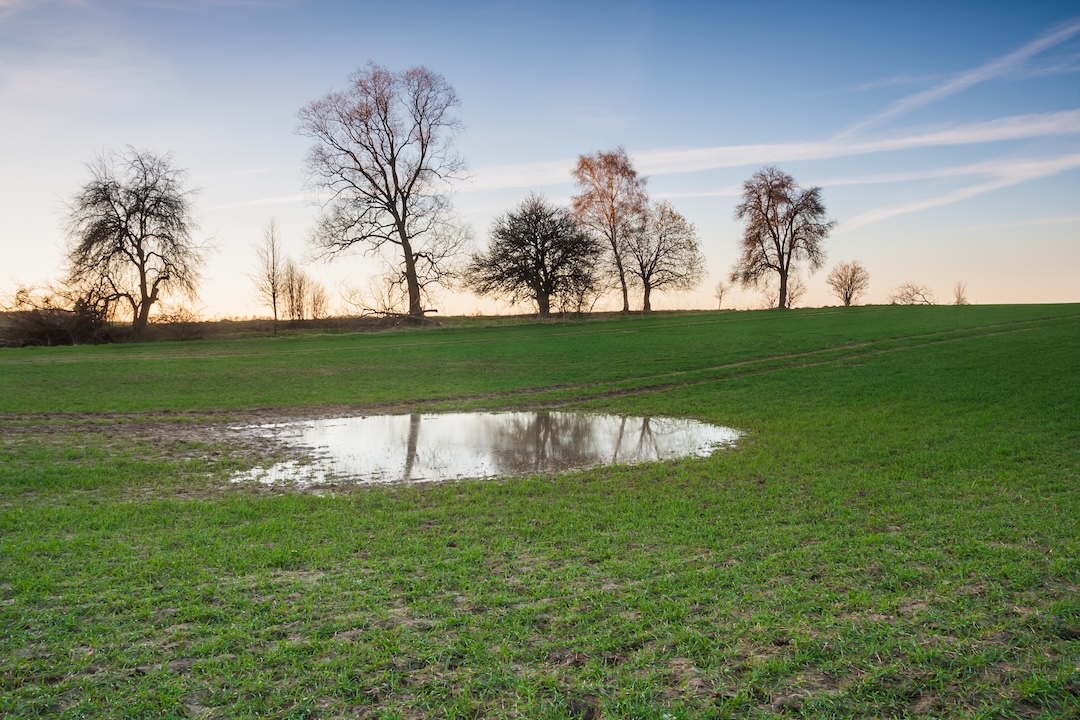
A healthy lawn needs the right amount of water, not too much or too little. If water doesn’t drain well, it can slowly harm your grass, soil, and nearby landscaping. Drainage problems are common, especially after heavy rain or melting snow, and people often miss them until the damage is clear. Spotting the early signs can help you fix the problem before it affects your yard’s long-term health.
Standing Water After Rain
A clear sign of poor drainage is water that collects on the surface after it rains. If puddles stay for hours or even days, water isn’t soaking into the soil as it should. Over time, standing water can choke grass roots, causing thin or bare spots in your lawn. This problem often happens in compacted soil or in low spots in your yard where water tends to gather.
Soggy or Spongy Grass
If your lawn feels soft or squishy when you walk on it, poor drainage could be the cause. Grass roots need air just as much as water. When the soil stays wet too long, roots can’t get enough air, which weakens the grass and slows its growth. Improving airflow in the soil through lawn aeration can help water move more efficiently and reduce that spongy feeling.
Patchy or Yellowing Grass
Poor drainage often leads to uneven lawn color. Grass in wet spots may turn yellow or light green, while healthier areas stay darker. These patches might look like a lack of nutrients, but the real problem is too much moisture around the roots. Proper grading with lawn aeration helps correct these problem areas and promotes stronger root development.
Muddy Areas and Soil Erosion
If some areas of your yard get muddy fast or wash away after it rains, poor drainage is probably to blame. Erosion not only changes how your lawn looks but can also uncover roots and weaken the grass over time. Yards with slopes or spots near downspouts are more likely to have this problem. Changing how water flows and improving soil can help protect these areas.
Increased Weed and Moss Growth
Weeds and moss thrive in damp places where grass struggles. If you see moss spreading or weeds taking over parts of your lawn, too much moisture could be the cause. Solving drainage problems makes it harder for weeds to grow and gives your grass a better chance to recover.
Why Drainage Issues Shouldn’t Be Ignored
Poor drainage affects more than just your lawn’s appearance. Soil that stays wet can cause root rot, disease, and lasting damage to your grass. Fixing the problem early can save you time, money, and stress later. Working with experienced providers, such as local lawn care professionals, can help identify the root cause and recommend the right solution for your property.
When to Get Professional Help
Some drainage problems can be fixed with simple changes, but others need an expert’s help. Things like soil type, slope, and compacted areas all matter, and finding the right balance takes experience.
With a tailored approach and proven lawn care solutions, their team knows how to correct drainage issues while strengthening your grass from the ground up. Whether it’s aeration, soil improvement, or ongoing maintenance, LawnMart provides the care your lawn needs to stay healthy in every season. Contact us today to get expert help and enjoy a lawn that drains properly and looks its best year-round.