

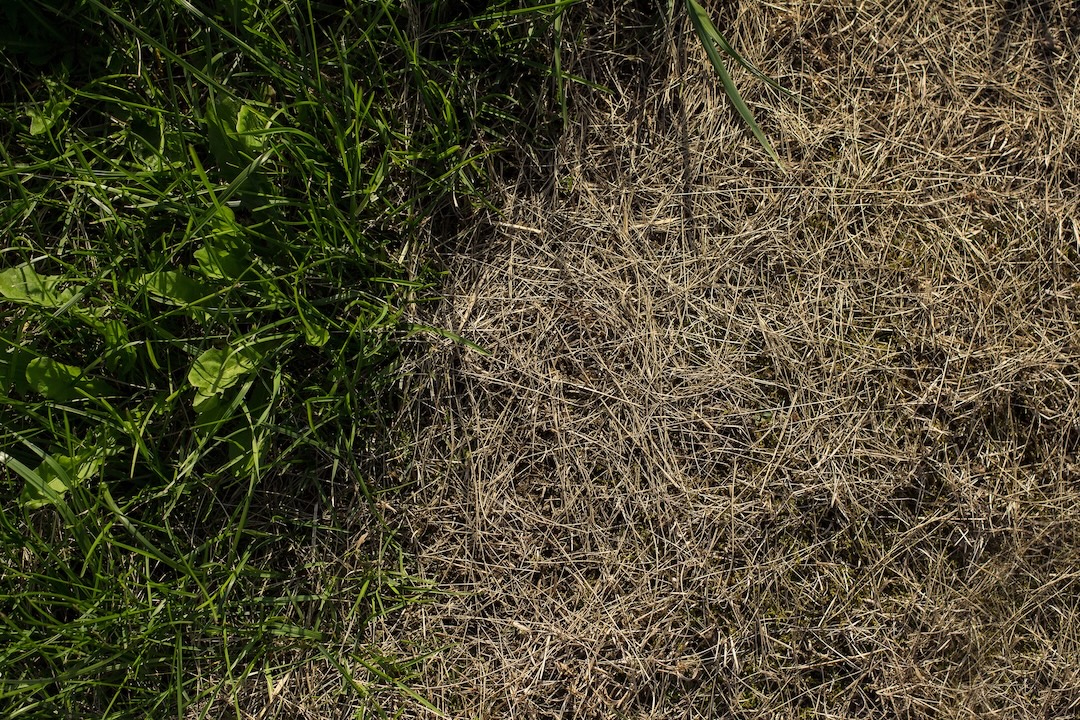
Hot, dry weather can affect even the healthiest lawns. When there isn’t much rain and temperatures stay high, grass can quickly become stressed. A drought-stressed lawn doesn’t always turn brown right away, so early signs are easy to miss. If you know what to watch for, you can act before the damage becomes permanent.
Grass That Loses Its Colour
A change in colour is often one of the first signs of drought stress. Healthy grass is a rich green, but stressed grass can look dull green, grey, or even bluish. This happens because the grass blades are trying to hold onto moisture. If big sections of your lawn start to look faded, it means the roots are not getting enough water to keep the grass healthy.
Footprints That Stay Visible
An easy way to check for drought stress is to walk across your lawn. If your footprints stay visible instead of springing back, your grass is struggling. This is because dry grass blades can’t recover after being bent. This is often an early sign that your lawn needs better watering or improved soil.
Dry, Crunchy Grass
As drought stress continues, grass blades can feel dry or brittle. In severe cases, your lawn might even sound crunchy when you walk on it. At this point, the grass has stopped growing to conserve energy, making it harder to recover. make this problem worse by preventing water from soaking properly. In these cases, lawn aeration can help improve water absorption and reduce stress on the grass.
Patchy or Thinning Areas
Lawns under drought stress often get thin or bare patches, especially in spots that get a lot of sun. These areas dry out faster than shaded parts and usually show damage first. Professional lawn aeration can loosen the soil and help water reach deeper roots, so your lawn can recover more evenly.
Increased Weed Growth
When grass is weakened by drought, weeds can quickly move in. Many weeds have deeper or stronger roots, so they survive dry conditions better than grass does. New growth recovery with proper lawn fertilization gives your grass the nutrients it needs to grow stronger and compete with weeds once moisture levels improve.
Preventing Long-Term Damage
Some drought stress is hard to avoid, but regular lawn care can help limit the damage. Water deeply but less often to encourage deeper roots. Mow a bit higher to shade the soil and keep in moisture. Healthy soil also helps your lawn handle dry weather better. If your lawn is still struggling despite your best efforts, professional help can make a real difference.
Get Your Lawn Back on Track
Drought stress doesn’t have to ruin your lawn for good. With the right care and timing, your grass can bounce back and grow healthy again. LawnMart use proven methods to improve soil, strengthen roots, and help your lawn through dry spells. Contact us today for expert help and enjoy a greener, stronger lawn all season.